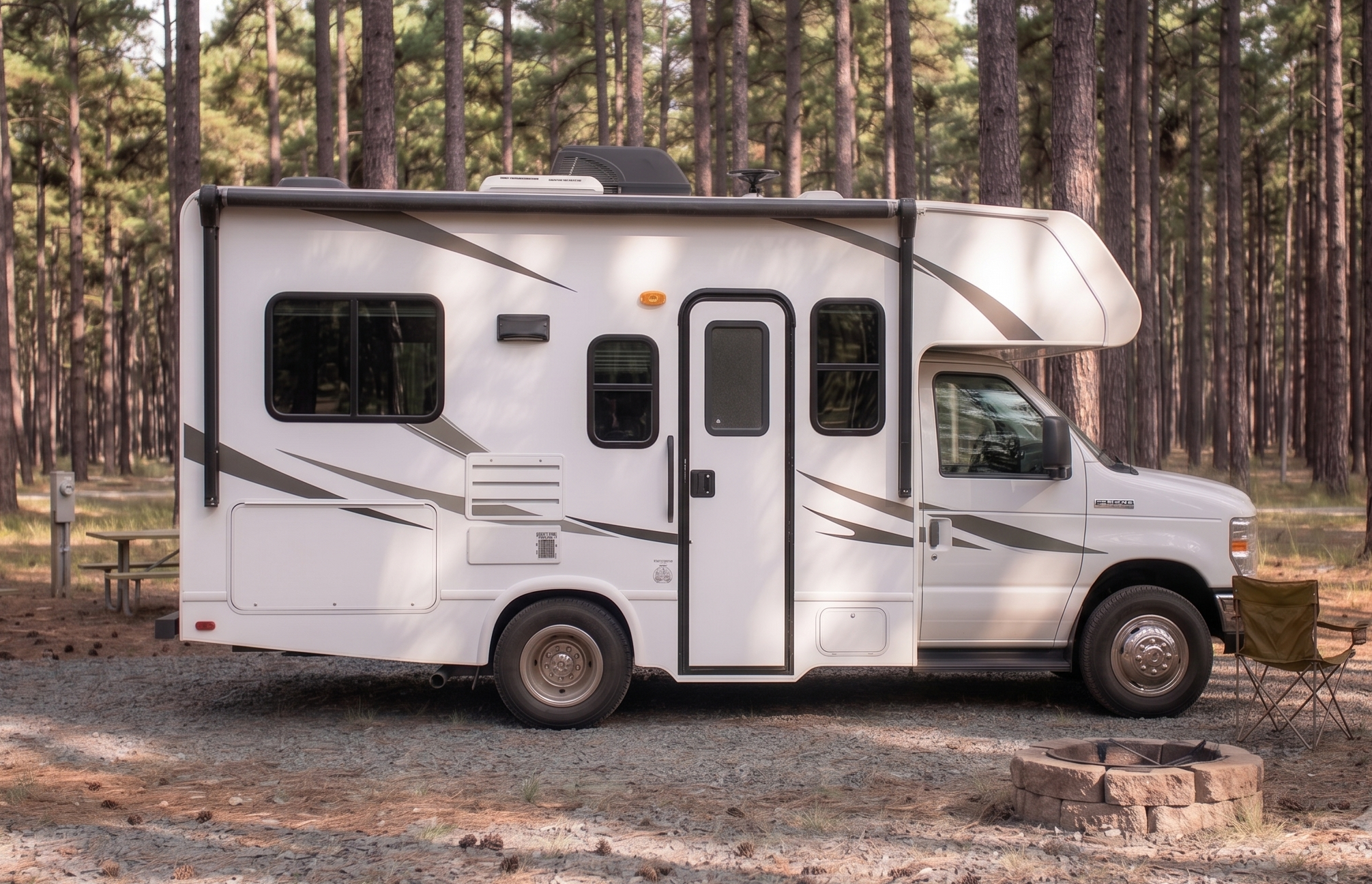
RV Door Locks: How to Upgrade the Weakest Point on Your Camper
If you've owned a camper for more than a season, you already know the factory door lock is an afterthought. It turns, it clicks, and it gives you just enough peace of mind to walk away from the rig — until the afternoon you realize how little actually stands between the outside world and everything you packed. Upgrading your RV door lock is one of the cheapest, fastest improvements you can make, and unlike a solar setup or a suspension tweak, you'll notice the difference every single time you come and go.
This guide walks through the state of RV door locks today: what the older hardware gets wrong, the main types worth considering, and how to think about keyless and smart options without overpaying for features you'll never use.
The problem with older RV door locks
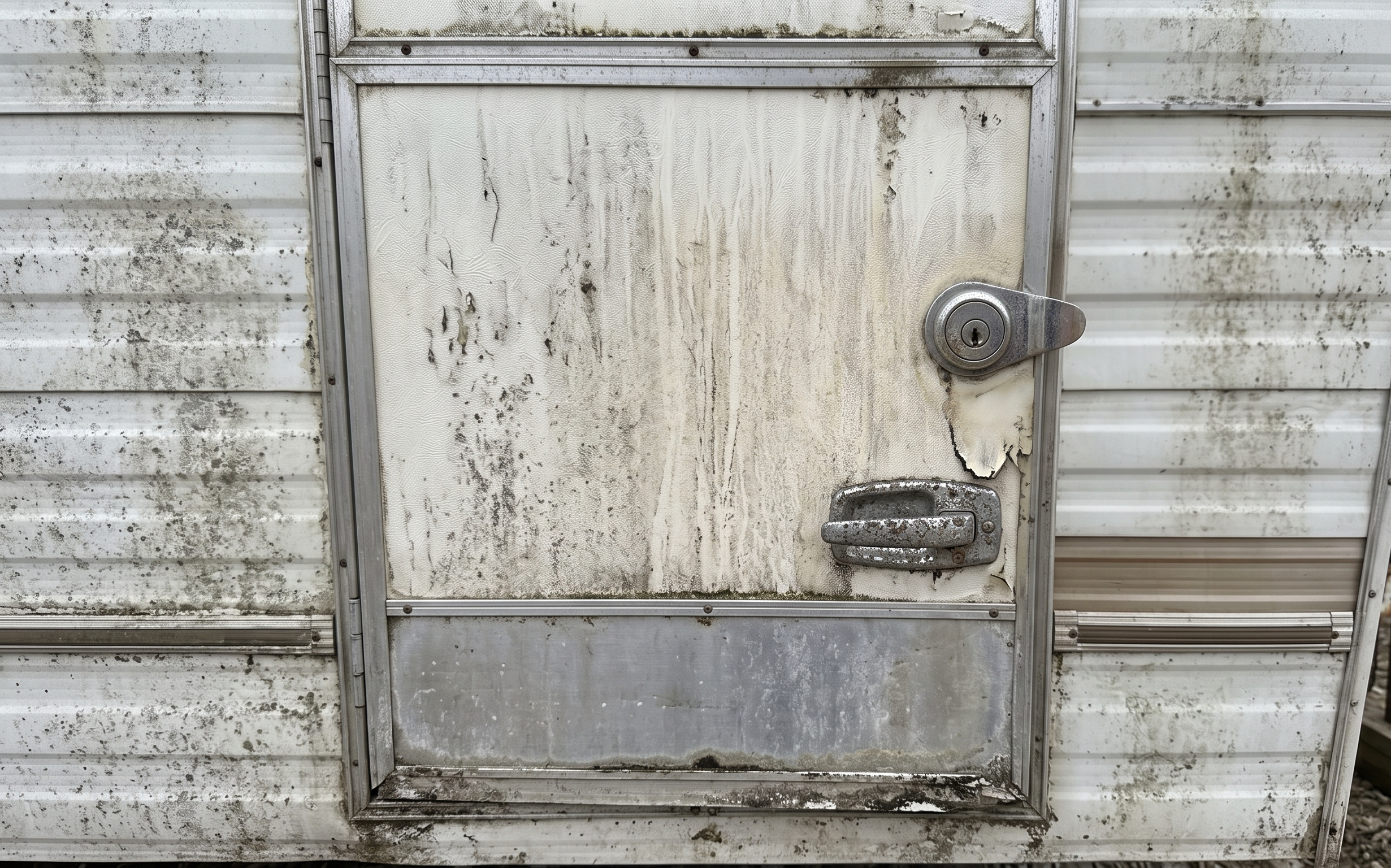
Here's the uncomfortable part. For years, most manufacturers fitted campers with a small handful of standardized locks, and many of them shipped with the same key. The old "CH751" is the classic example — a single key that opens a startling number of storage bays and many entry latches across brands and model years. If your rig is more than a few years old, there's a real chance a stranger in the next campsite over is carrying a key that fits your door.
Even setting the shared-key issue aside, older RV door locks tend to be loose, rattly, and easy to defeat with basic tools. They were built to a price, not to a threat model. That's the baseline most people are upgrading away from, and it's why even a modest replacement feels like a meaningful jump in security.
The main types of RV door locks
Before shopping, it helps to understand the categories. The types of RV door locks on the market today fall into three broad buckets, and the right one depends less on your budget than on how you actually use your camper.
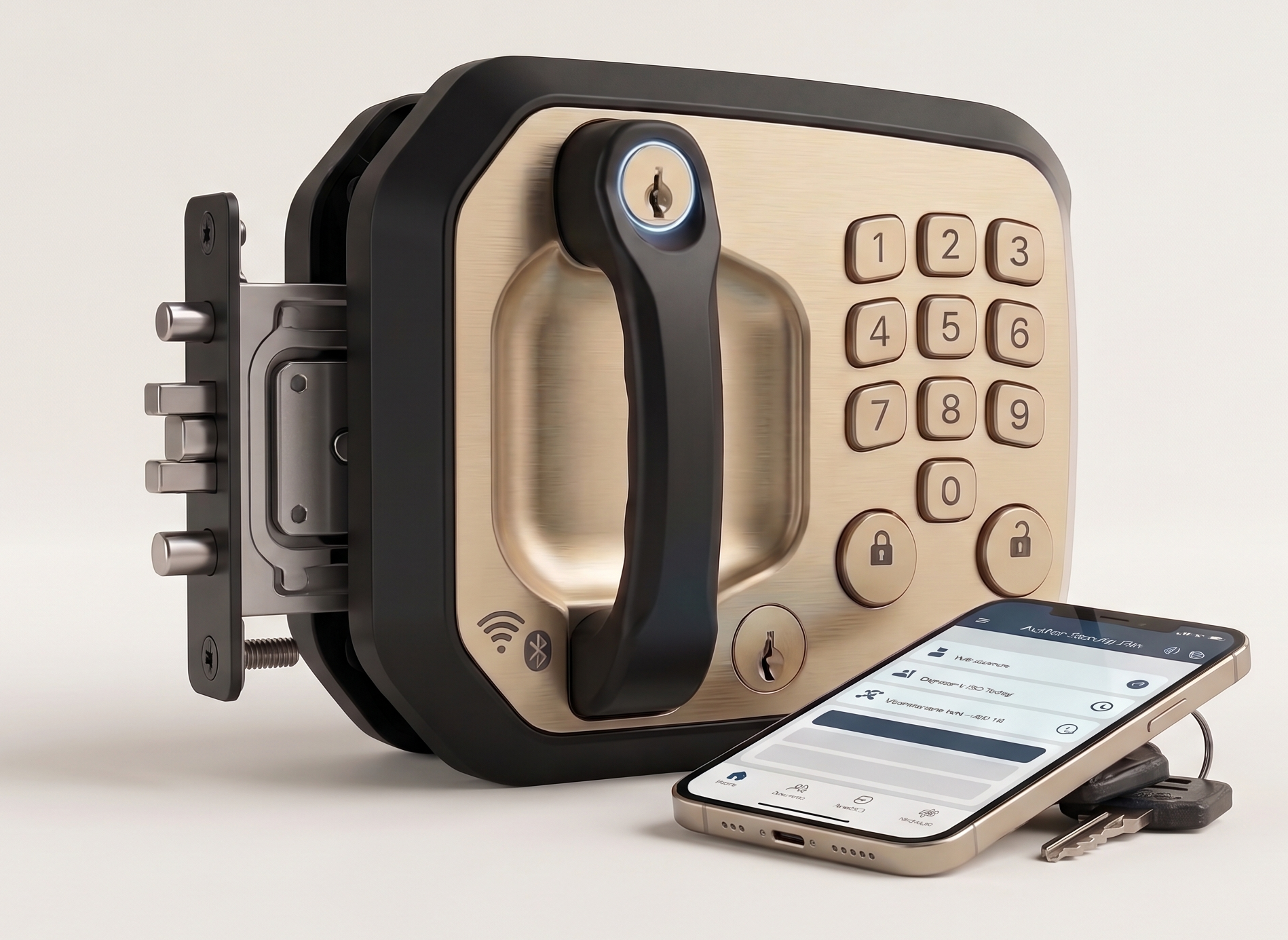
Keyed replacements
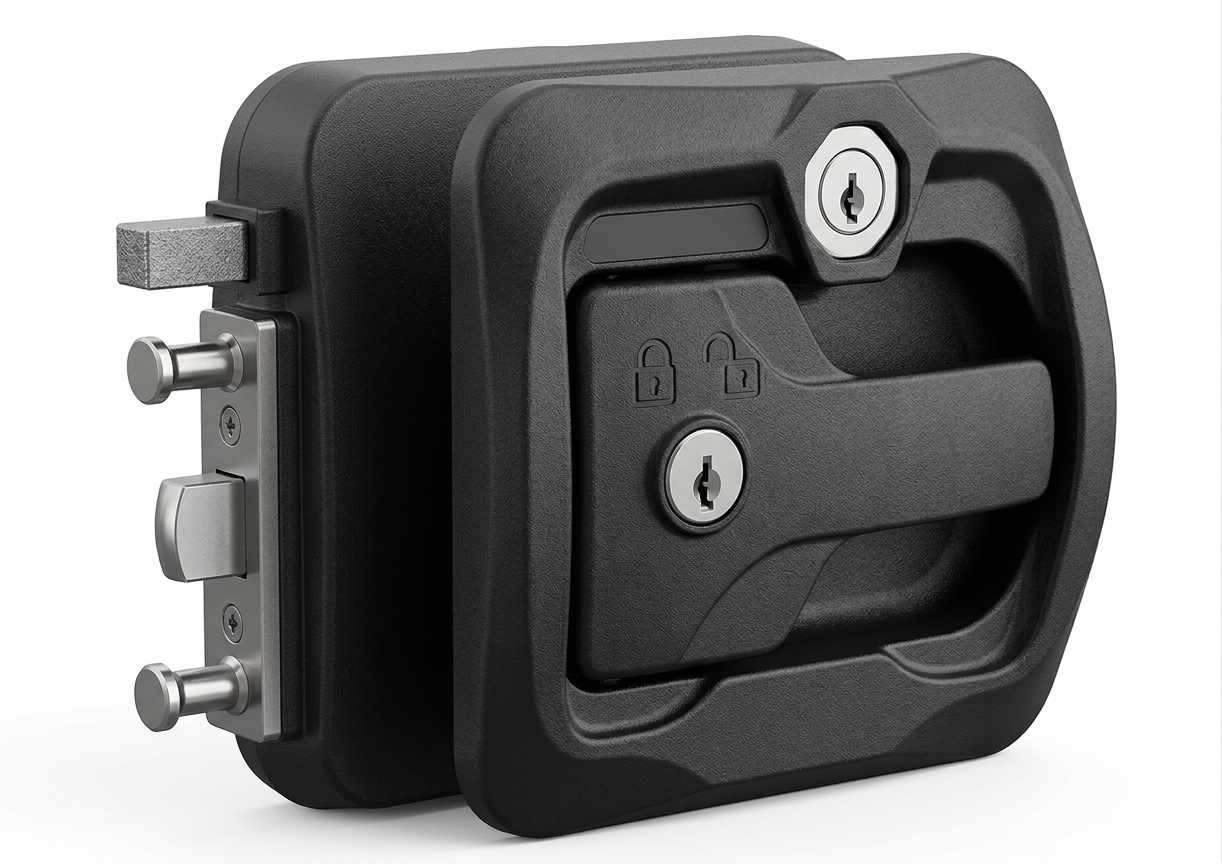
The simplest upgrade swaps your factory unit for a better keyed lock with a unique cylinder, so you're no longer sharing a key with half the campground. These are inexpensive and require no electronics, no batteries, and no learning curve. The trade-off is that you're still carrying — and can still lose — a physical key.
Keypad and combination locks
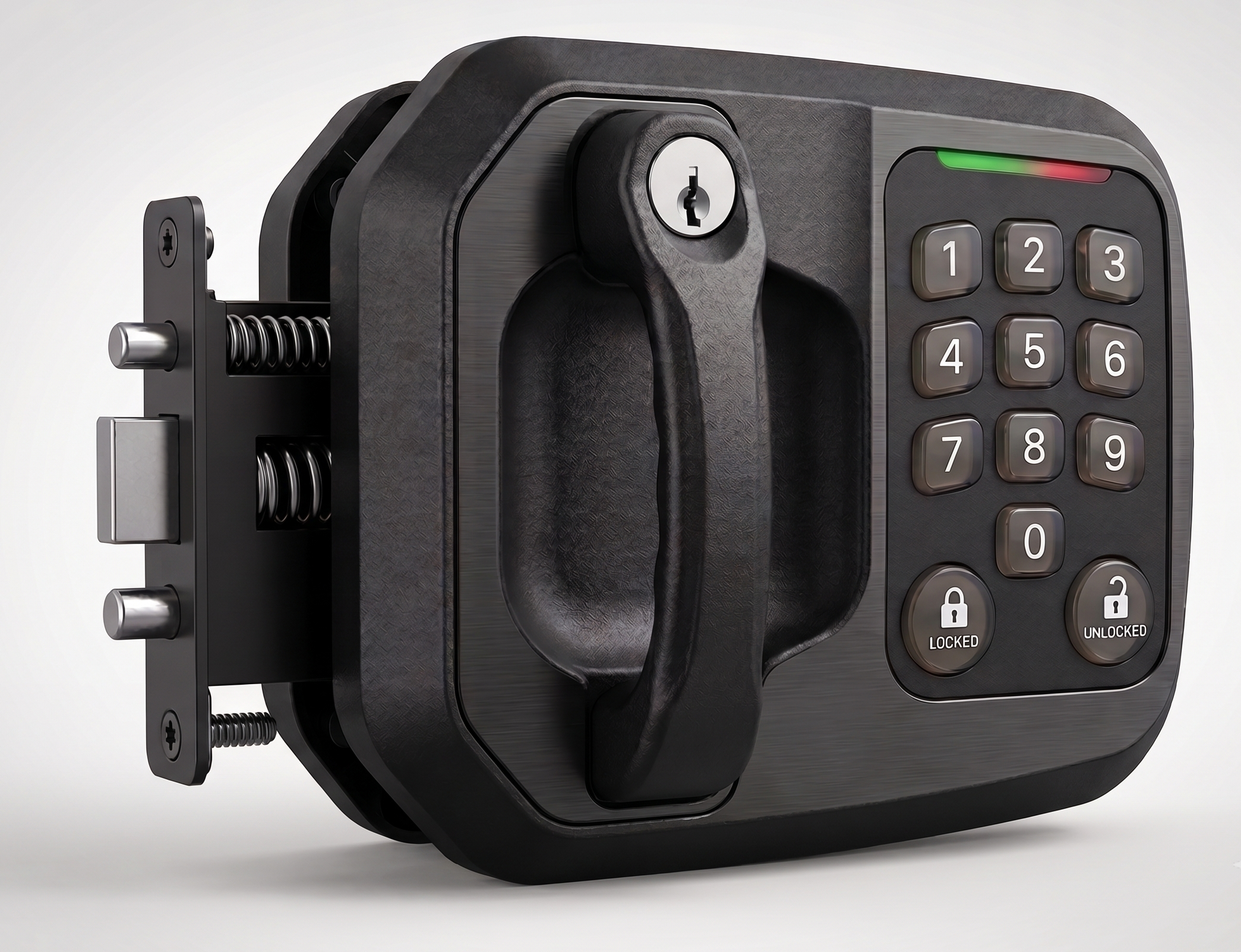
A keyless RV door lock replaces the key with a code. You punch in a combination on a keypad, the deadbolt releases, and you're in. For a lot of RVers this is the sweet spot: no key to drop in a lake, no lockout when you leave your keys inside, and an easy way to let a friend or cleaner in without handing over anything physical. A combination door lock also shrugs off the shared-key problem entirely, since there's no standardized cylinder to pick.
Smart locks
The top tier adds a wireless brain. A smart lock for a camper typically pairs Bluetooth with a keypad, and sometimes adds phone-based entry so your handset becomes the key. This is where the RV world borrows from the residential smart door market — the same convenience you'd expect from a smart lock on a house, adapted for a smaller door and a mobile lifestyle.
Why go keyless
The case for a keyless RV door lock is mostly about friction. Campers get in and out of the rig constantly — for firewood, for the cooler, for the third trip to the bathhouse — and fishing for keys every time gets old fast. A camper door lock that's keyless removes that ritual. You set a code, everyone in your travel group memorizes it, and the key ring stays in a drawer.
There's a security angle too. A keyed lock is only as safe as your ability to keep track of the key, and keys get lost, copied, and left in ignitions. A code lives in your head. If you rent your rig out, hand it off between family members, or share it with a cleaning service, you can change the code between guests instead of rekeying hardware. That flexibility is the single most cited reason people make the switch.
Where smart and NFC locks fit in
Smart options are worth understanding even if you decide you don't need one. The appeal of a smart lock on an RV is remote and phone-based control: unlocking from your phone as you walk up with an armful of groceries, checking whether you actually locked the door after you've pulled out of the site, or generating a temporary code for a guest that expires on its own.
Some models add NFC. An NFC door lock lets you tap a phone or a small fob against the housing to unlock, which is fast and doesn't drain the batteries the way a constant Bluetooth connection can. It's the same tap-to-enter idea you'll find on newer smart door hardware for houses, shrunk down for a camper. The honest caveat: the more electronics you add, the more you're relying on batteries and firmware in an environment full of vibration, temperature swings, and moisture. For a lot of RVers, a solid keypad lock hits the reliability-to-convenience ratio better than a fully connected smart lock does. Match the tech to how you actually camp, not to the spec sheet.
What "high security" really means on a camper
It's tempting to chase the most fortified option available, but high security RV door locks are a slightly different animal than high-security residential locks. On a house, the door and frame are structurally strong, so the lock is the meaningful barrier. On a camper, the door skin and frame are relatively thin — which means past a certain point, upgrading the lock delivers diminishing returns, because a determined intruder can bypass the lock entirely.
That's not a reason to skip the upgrade. It's a reason to be realistic about what you're buying. A good RV entry door lock defeats the two most common real-world threats: the shared factory key, and the opportunist testing handles down a row of parked rigs. It raises the effort required past the point where casual theft makes sense. What it won't do is turn a fiberglass door into a bank vault, and any product promising otherwise is selling you a feeling rather than protection. Spend for a solid deadbolt, a unique code or key, and weather resistance — and put the rest of your security budget toward a hitch lock, wheel locks, or an alarm, where it does more good.
How to choose the best RV door lock for your rig
There's no single best RV door lock, only the best one for how you travel. A few questions narrow it down quickly:
- How's your current door cut? Most replacements are designed to drop into a standard RV entry door lock cutout, but measure your existing hardware before ordering. Deadbolt spacing and handle style vary.
- Do you actually want electronics? If you camp off-grid, in extreme cold, or you simply don't want another thing to charge, a quality keyed or combination door lock will serve you for years with zero fuss.
- How many people need access? Solo or a couple? A keypad is plenty. Renting the rig out or sharing across a family? The best keyless RV door lock for you is one with multiple codes and easy code management.
- Weather exposure. Your lock lives outside. Look for a housing rated to handle rain and dust, especially if you store the rig uncovered.
For most owners, the practical answer is a keypad-based keyless lock. It solves the shared-key problem, kills the daily key hassle, and doesn't tie you to an app or a battery you'll forget to change. Move up to a smart or NFC model only if remote access or guest management genuinely fits your life — and stay with a good keyed replacement if simplicity is what you value most.
Want to see how the top market options stack up? Head over to our RV Door Lock Buyer's Guide for a complete breakdown of features, prices, and fitments.
The bottom line
An RV door lock upgrade is a small project with an outsized payoff. Whatever you started with, moving off the factory hardware gets you away from the shared-key problem that plagues older RV door locks and gives you a door you can actually trust. Decide first whether you want keyed, keyless, or smart, measure your door, and match the lock to how you really camp rather than to the longest feature list. Do that, and the weakest point on your camper quietly becomes one you never think about again — which is exactly the point.